What is Unified Storage?
What are Unified Storages?
Unified storage is a storage architecture that supports multiple storage types, typically block, file, and object storage, on the same underlying hardware platform, managed through a single interface, rather than requiring separate, siloed systems for each type. In a traditional, non-unified environment, an organization might run one dedicated system for block storage supporting its databases, a separate file server for shared documents, and yet another platform for archival object storage, each with its own management console, capacity pool, and administrative overhead. Unified storage consolidates these into one platform capable of dynamically allocating capacity across whichever storage type a given workload needs, at the time it needs it. This means the same physical storage system can simultaneously serve a virtualized database environment, a shared file repository for collaboration, and archival or backup data, without requiring separate hardware for each.
Why do you need to know it?
Running separate storage systems for block, file, and object data multiplies administrative overhead, since different management consoles, different capacity planning processes, and different sets of credentials and access policies all need to be maintained. It can also lead to wasted capacity, where one silo runs low on space while another sits underutilized, with no easy way to shift capacity between them. As organizations run increasingly mixed workloads, such as databases alongside virtual machines and shared file collaboration alongside AI or archive data, the operational cost of managing separate storage silos grows accordingly. Understanding unified storage matters for IT teams evaluating whether to consolidate their storage infrastructure, since it directly affects both the ongoing administrative burden of managing storage and how efficiently available capacity gets used across different types of workloads.
Benefits of Unified Storages
The primary benefit of unified storage is operational simplicity: managing block, file, and object storage through a single interface reduces the training, tooling, and administrative overhead that comes with maintaining separate systems for each storage type. Dynamic capacity reallocation across storage types means organizations don't need to guess in advance exactly how much capacity each workload will need, since space can shift to wherever it's actually being consumed rather than sitting locked in an underused silo. Deduplication across previously siloed data can also reduce overall storage consumption, since redundant data no longer needs to be stored separately in each system. For organizations running mixed workloads, including databases, virtual machines, shared file collaboration, and archival or AI data, unified storage lets a single platform serve all of them, reducing both the physical footprint and the operational complexity of the overall storage environment.
How does ASUS help?
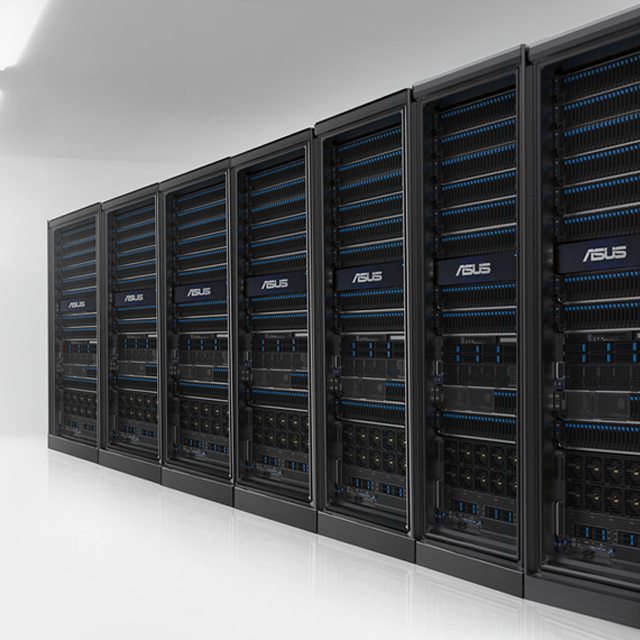
ASUS delivers unified storage through its VS320D dual-controller appliance family. The VS320D-RS26U uses a dual-active architecture for full redundancy, pairing an Intel Xeon processor with 8-port 10GbE SFP+ networking, expandable to 25GbE or 32Gb Fibre Channel, and 26 2.5-inch hot-swap bays, scaling up to 7.8 petabytes of raw capacity when expanded with JBOD shelves. The VS320D-RS12U offers a dual-controller, active-active high-availability architecture with 3.5-inch drive bays and networking expandable to 25GbE, scaling to a similar 7.7 petabytes of raw capacity with JBOD expansion. Both systems are positioned by ASUS for versatile enterprise data management, supporting modern applications that draw on multiple storage types simultaneously. By combining high-availability dual-controller designs with the flexibility to expand capacity through JBOD shelves as needs grow, ASUS gives customers a unified storage platform that can scale from a single appliance to a multi-petabyte deployment without switching architectures.